

You keep applying.
You keep meeting the criteria.
You keep not hearing back.
The gap is almost never your experience. It’s whether your application shows it clearly enough to score.
15 minutes. No pitch. You leave with a clear next step.

Built by someone inside the system.
I’m Cherith, an epidemiologist working in UK public health and the founder of Public Health Careers Hub. I built this platform because qualified people kept being rejected from roles they could do, not for lack of experience, but because their applications didn’t show it clearly.
Public health applications are scored, not skimmed. Strong candidates miss out when their evidence doesn’t clearly show four things:
Why strong applicants still fail
Responsibility
What you owned and delivered, not just what you were involved in.
Leadership
Where you initiated, coordinated or moved work forward.
Autonomy
The decisions and judgement that were yours.
Impact
What changed because of your work.
This framework was developed from NHS Agenda for Change band descriptors and applied experience in the field. It underpins every service and resource on this site.
Not sure which direction fits you?
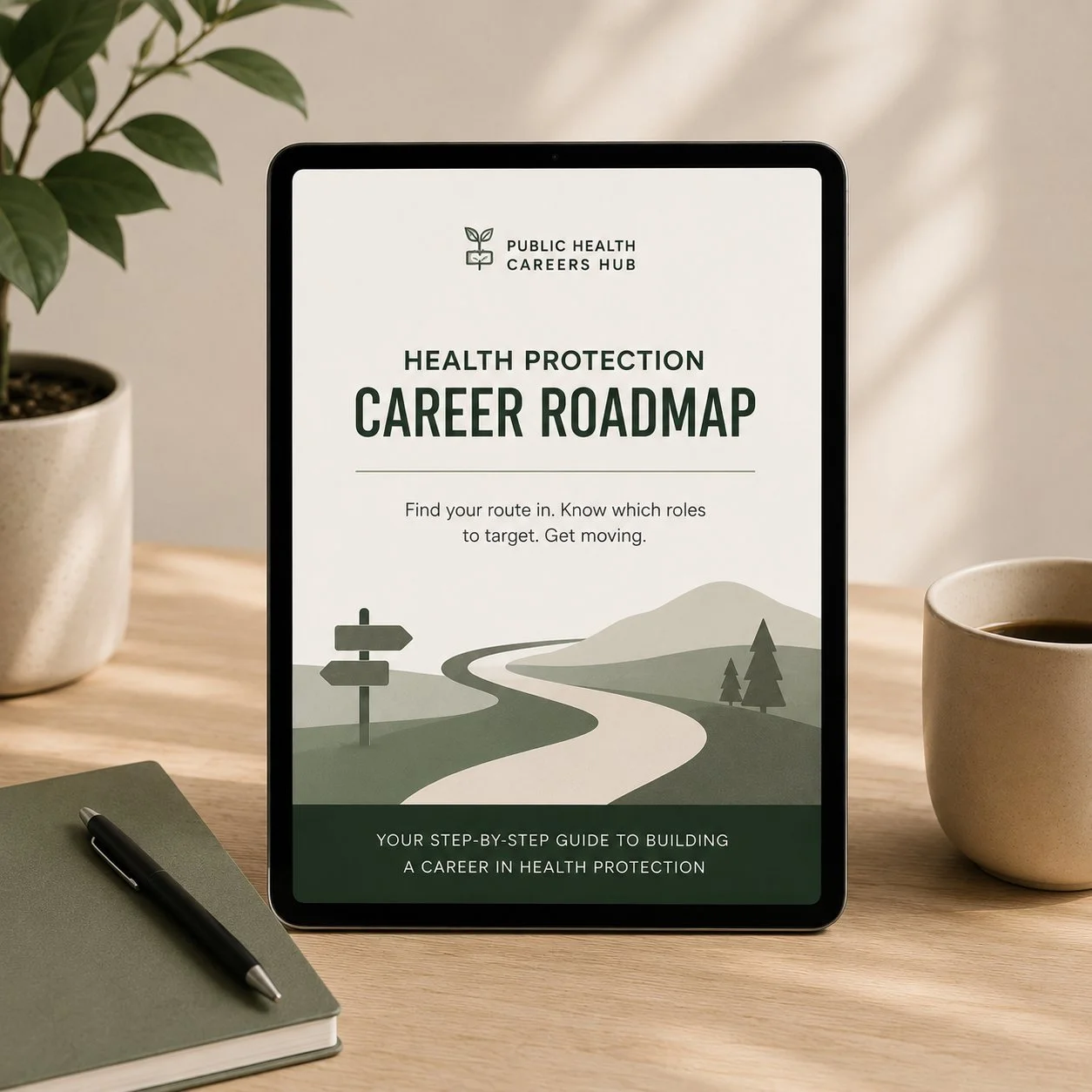
Confused about which employer actually wants your background — NHS, UKHSA, or local authority? Health Protection recruits from more directions than most people realise. Know which roles to target. Get moving.
This is a practical, decision-led PDF guide designed to give you clarity fast - not more information to wade through. Work through it in under 40 minutes.
Find your background in the decision tree and turn to your one-page cheat sheet. It tells you which roles to target, which organisations to search, which keywords to use and the mistake most people from your background make. Role cards, organisation search guides and before-and-after application examples are all included as reference material to return to when you need them.
Covers NHS Trusts/ Health Boards, Public Health Scotland, PSD Scotland, UKHSA, local authorities, universities and more - with the correct job search platforms for each.
Built for nurses, pharmacists, biomedical scientists, data analysts, environmental health professionals and public health graduates applying for UK public health roles.
Part of the Public Health Career Roadmap series - one roadmap for each area of UK public health.
NHS, UKHSA, or local authority? Know which one wants your background.
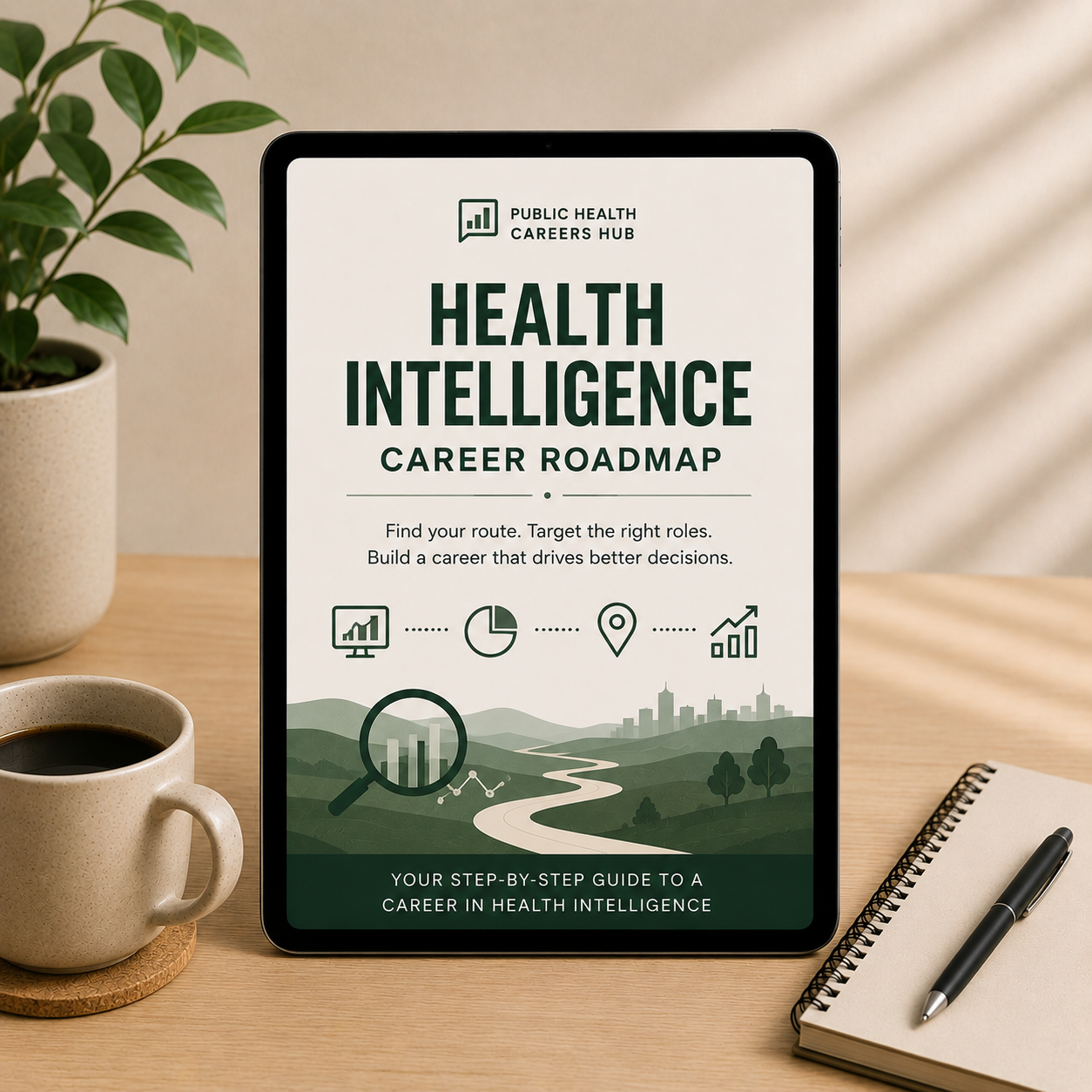
If you’re strong on data but unsure whether that means NHS, UKHSA or local authority, this is the confusion Health Intelligence causes most. Know which roles to target. Get moving.
This is a practical, decision-led PDF guide designed to give you clarity fast - not more information to wade through. Work through it in under 40 minutes.
Find your background in the decision tree and turn to your one-page cheat sheet. It tells you which roles to target, which organisations to search, which keywords to use and the mistake most people from your background make. Role cards, organisation search guides and before-and-after application examples are all included as reference material to return to when you need them.
Covers NHS Trusts and Health Boards, Public Health Scotland, PSD Scotland, UKHSA, local authorities, integrated care systems, universities and more - with the correct job search platforms for each.
Built for data analysts, business intelligence analysts, healthcare scientists, public health graduates, researchers, statisticians, business analysts and information analysts applying for UK public health roles.
Part of the Public Health Career Roadmap series - one roadmap for each area of UK public health.
Strong on data but unsure where it fits? NHS, UKHSA, or local authority, decide fast.
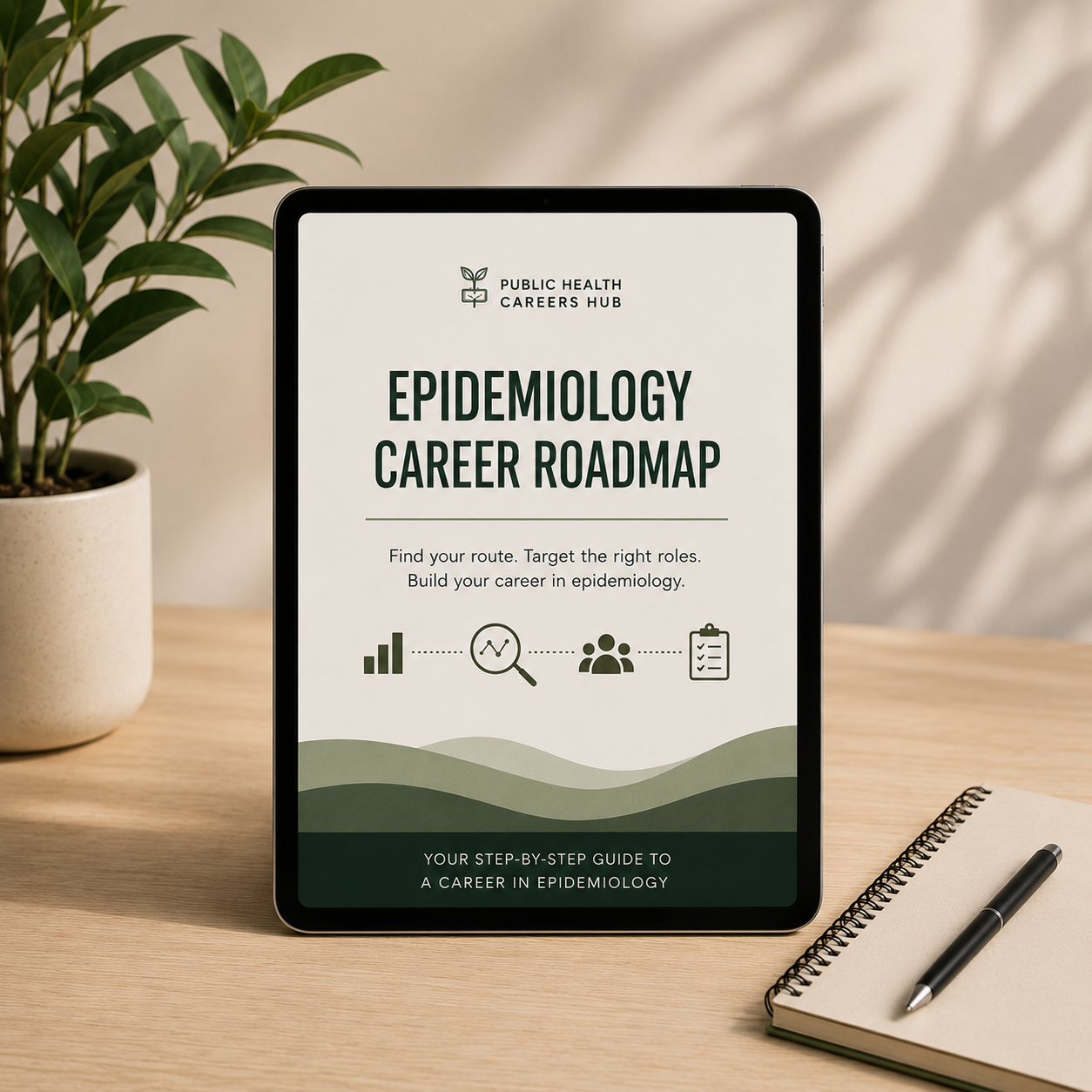
Job titles in epidemiology vary wildly between employers, and it’s rarely obvious which one matches your background. This roadmap cuts through that. Know which roles to target. Get moving.
This is a practical, decision-led PDF guide designed to give you clarity fast - not more information to wade through. Work through it in under 40 minutes.
Find your background in the decision tree and turn to your one-page cheat sheet. It tells you which roles to target, which organisations to search, which keywords to use and the mistake most people from your background make. Role cards, organisation search guides and before-and-after application examples are all included as reference material to return to when you need them.
Covers UKHSA, Public Health Scotland, PSD Scotland, NHS Trusts and Health Boards, local authorities, universities, NIHR and more - with the correct job search platforms for each.
Built for biomedical scientists, healthcare scientists, data analysts, public health graduates, researchers, statisticians, nurses and allied health professionals applying for UK public health roles.
Part of the Public Health Career Roadmap series - one roadmap for each area of UK public health.
Job titles vary everywhere. This roadmap tells you which one is actually yours.
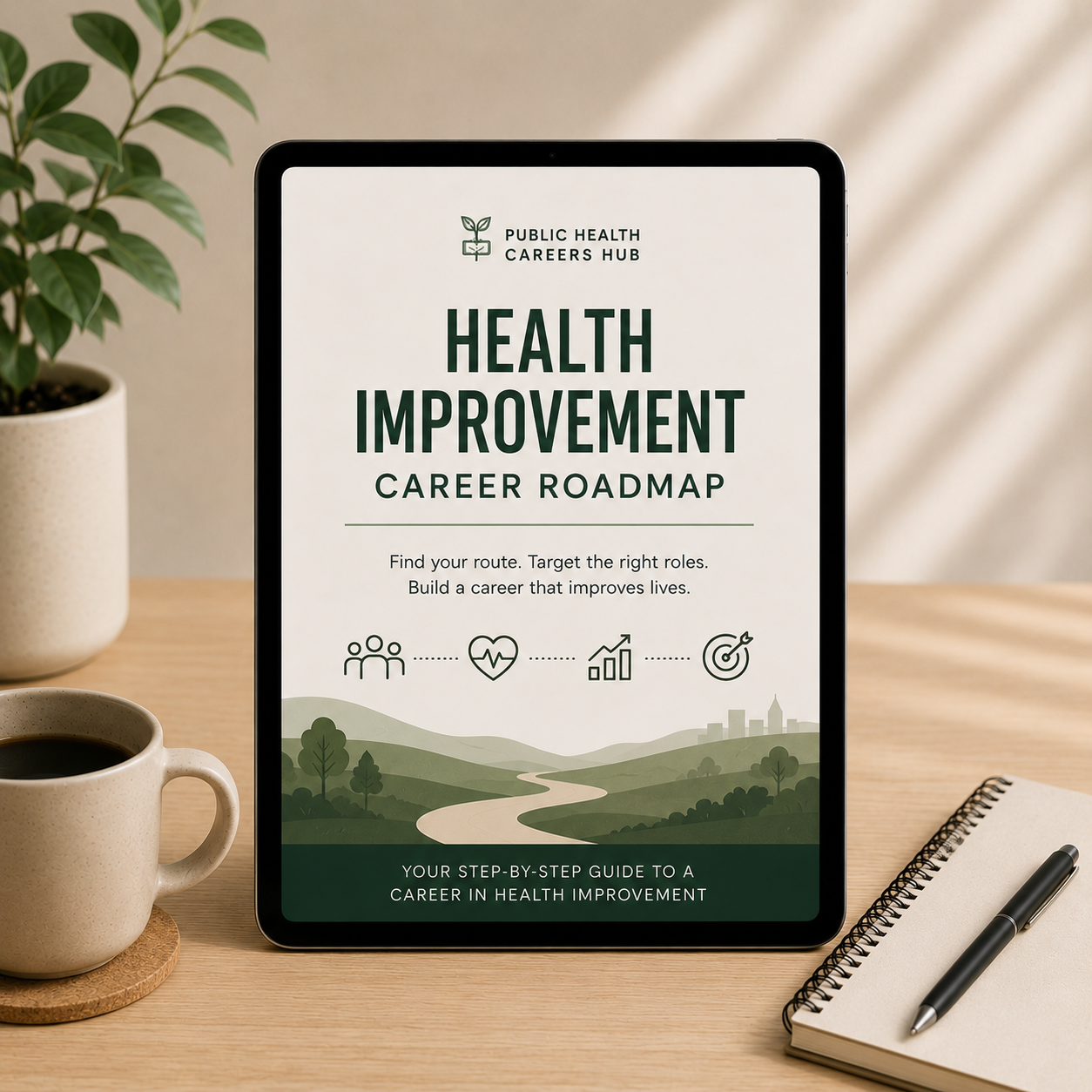
Health Improvement roles sit across the NHS, local government, housing and the charity sector, often under different job titles for the same work. Know which roles to target. Get moving.
This is a practical, decision-led PDF guide designed to give you clarity fast - not more information to wade through. Work through it in under 40 minutes.
Find your background in the decision tree and turn to your one-page cheat sheet. It tells you which roles to target, which organisations to search, which keywords to use and the mistake most people from your background make. Role cards, organisation search guides and before-and-after application examples are all included as reference material to return to when you need them.
Covers local authorities, NHS Trusts and Health Boards, Public Health Scotland, PSD Scotland, housing associations, leisure trusts, charities and more - with the correct job search platforms for each.
Built for nurses, allied health professionals, public health graduates, community development professionals, programme managers, education and health promotion professionals and local government workers applying for UK public health roles.
Part of the Public Health Career Roadmap series - one roadmap for each area of UK public health.
Same work, different job titles, different sectors. Find yours.
Already know your evidence is strong? Here’s what else can help
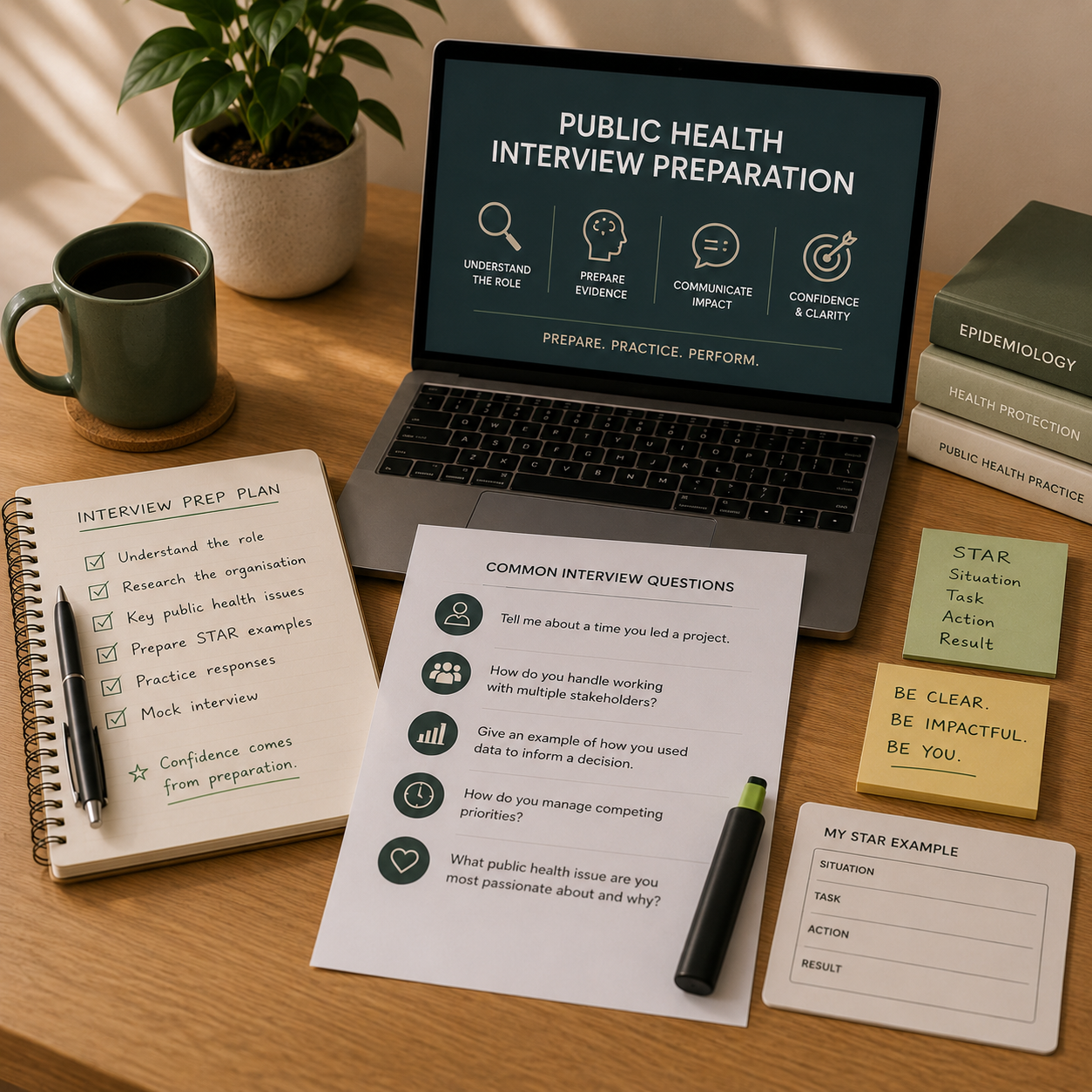
Role-specific interview preparation designed to help you approach your interview with greater clarity and confidence. For candidates who have an interview and need focused, role-specific preparation fast.
Two sessions. One package.
Session 1 — Interview Strategy (45 minutes):
Send your job description, person specification, and supporting statement beforehand. I prepare your likely interview themes, role-specific questions, and which examples to prioritise. We work through your strategy together.
Between sessions:
You receive a personalised prep guide covering likely competency themes, mapped questions, and answer structure guidance to prepare against before your mock.
Session 2 — Mock Interview (45 minutes)
A realistic mock using role-specific questions, followed by structured feedback on your answers and evidence.
How booking works
Book Session 1 first. Afterwards you receive a link to book your mock within seven days. Book Session 1 as early as possible to leave adequate preparation time before your interview.
Important Information
PHCH does not guarantee interview outcomes. The aim is to help you prepare and present your existing experience as clearly and confidently as possible.
Got the interview? Prepare with role-specific strategy and a mock.
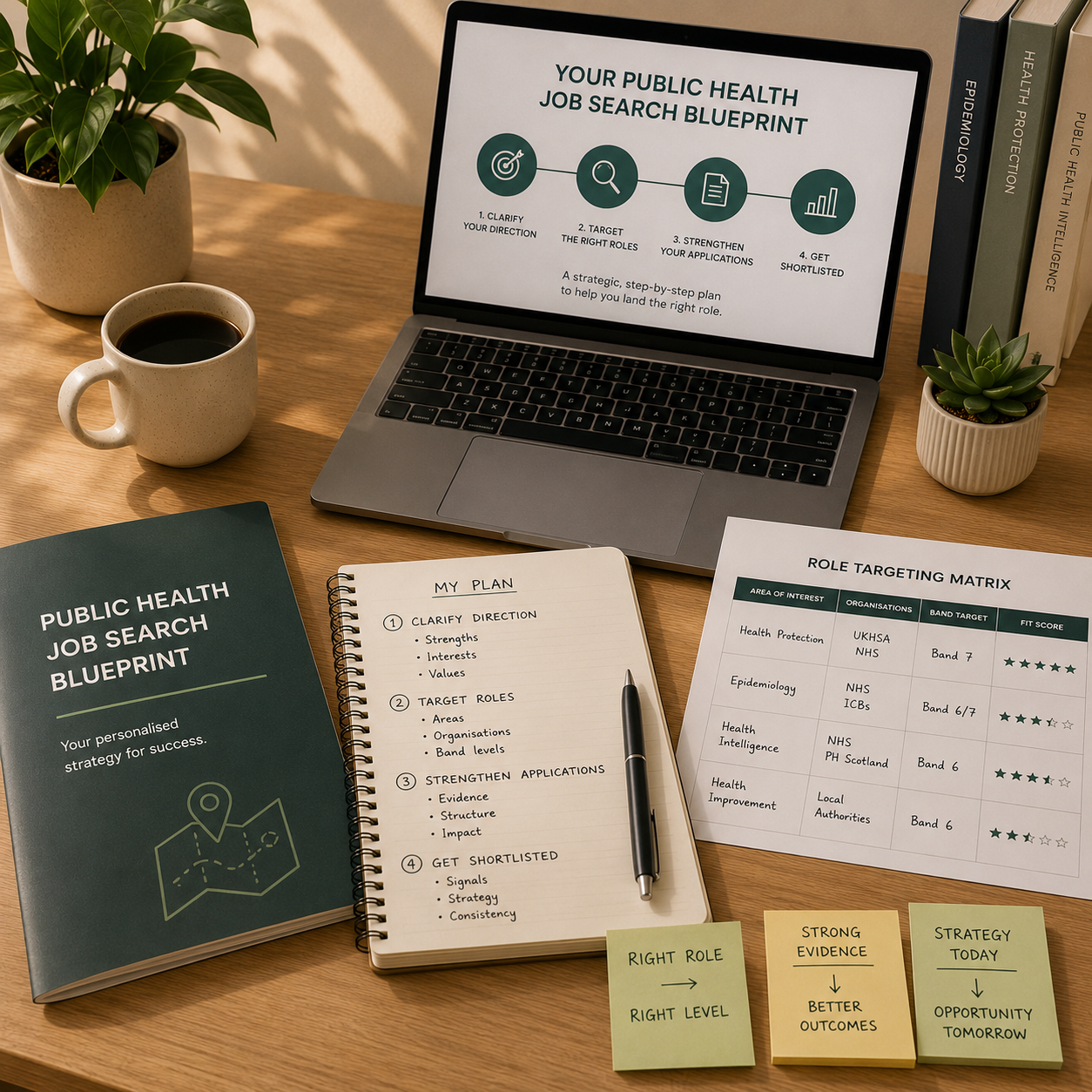
You have the qualifications. You are putting in the applications. But you are not getting shortlisted.
Nobody is telling you why. And generic career advice is not built for this sector.
The problem is rarely effort. It is usually strategy, it’s often applying for the wrong roles, targeting the wrong band, or focusing on organisations where your experience does not signal what panels are looking for.
The Public Health Job Search Blueprint gives you a clear, personalised plan built around your actual experience and realistic options.
Who This Is For:
MPH students and graduates entering the job market
Career changers moving into public health
Practitioners ready to progress to the next band
Professionals applying repeatedly without getting shortlisted
Anyone unsure which roles or organisations to target
What You Get:
A 90-minute Blueprint Session where we work through your situation, identify what is not working, and build your strategy.
A written Public Health Job Search Blueprint delivered within 5 working days. This includes your public health pathway assessment, target role and organisation strategy, band readiness assessment, and a personalised 90-day action plan.
One full application review included. Submit a live or draft application and receive a written analysis identifying exactly where your application needs to be stronger.
By the End of the Process You Will Know:
What roles to target and what to stop applying for
Which band your experience genuinely supports
Which organisations give you the best realistic chance
What your next 90 days should look like
Important Information
PHCH does not guarantee shortlisting outcomes. The Blueprint provides a personalised strategy and application review based on your existing experience — the aim is to help you target the right roles and present your evidence as strongly as possible.
Applying repeatedly with no shortlist? A personalised 90-day plan and application review.